
Quick Summary: What This Blog Covers
Discover what happens if you don’t replace missing teeth, from bone loss and shifting teeth to bite problems, changes in facial appearance, and rising treatment costs. This guide explains why timely tooth replacement is essential for protecting your oral health, confidence, and long-term smile.
Introduction
You lost a tooth. Maybe you had an accident. Maybe it got pulled because of decay. Maybe it just fell out on its own for some reason. Whatever happened, now you have a gap in your mouth.
Your first thought is probably that it is not that big of a deal. People live with missing teeth all the time. You can still eat. You can still talk. It is just one tooth. You figure you will get it replaced eventually. No rush. No urgency.
Except ignoring that missing tooth is one of the worst decisions you can make for your oral health and your overall appearance. That single missing tooth sets off a chain reaction of problems. Problems that get worse every single day you wait. Problems that get exponentially more expensive to fix the longer you delay.
Most people do not realize what actually happens when you leave a tooth missing. They think it is just a gap. Actually it is way more serious than that. Your entire mouth starts changing. Your bone structure changes. Your remaining teeth start moving. Your bite gets misaligned. Your face shape changes. Your speech gets affected. Your confidence gets destroyed.
Contemporary Family Dentistry sees the damage that missing teeth cause every single day. Patients come in thinking they just need a quick replacement. Then the dentist shows them all the secondary damage that happened while they were waiting. The damage that could have been prevented if they had just replaced the tooth immediately.
This guide walks you through exactly what happens when you leave a tooth missing. Everything that goes wrong. Everything that gets more expensive. Everything that changes about your mouth and face. By the end you will understand why replacing missing teeth immediately is one of the smartest investments you can make in your health.
Bone loss starts immediately
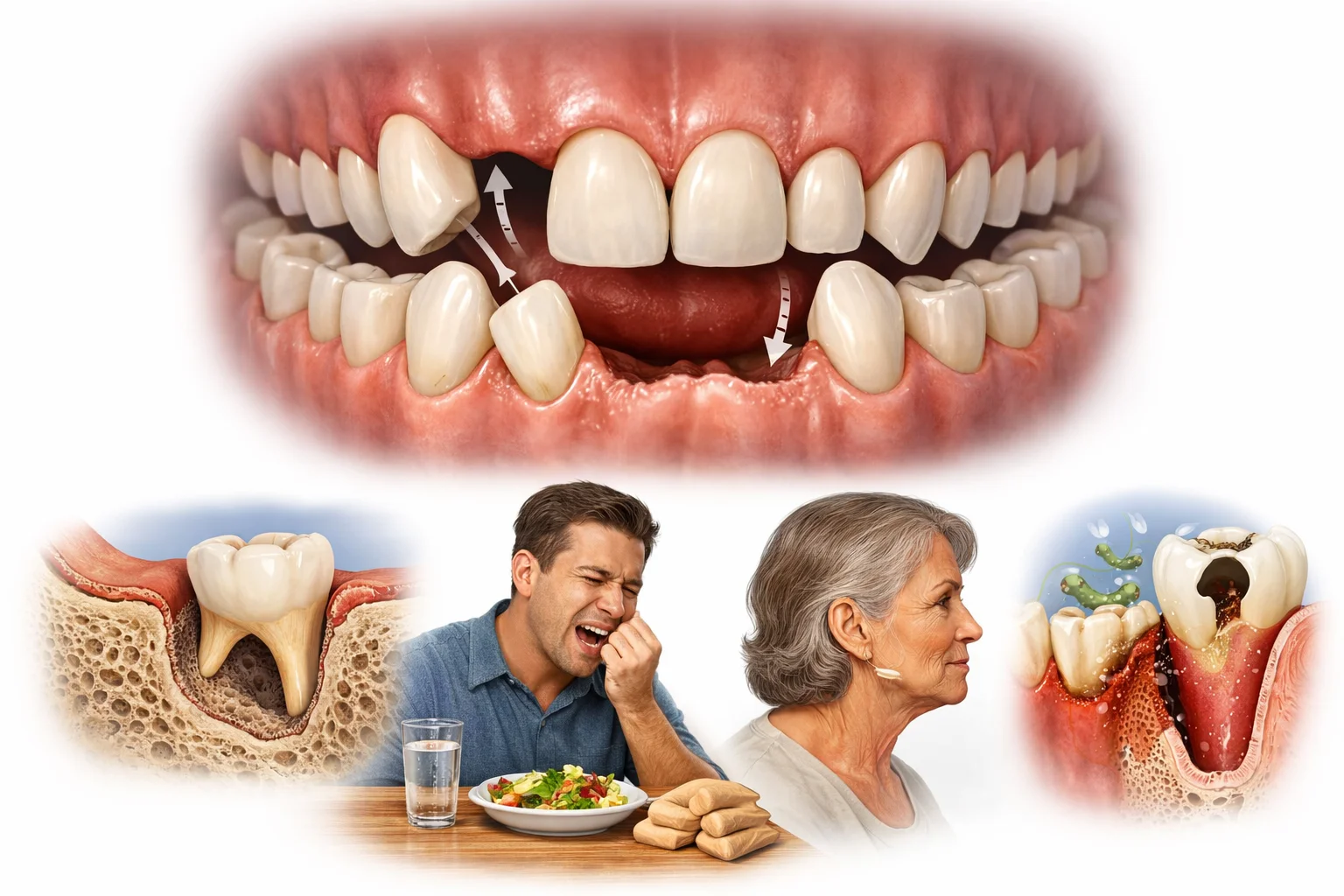
Here is what most people do not understand. Your teeth are not just sitting in your mouth randomly. Your teeth are held in place by bone. The roots of your teeth stimulate that bone. That stimulation keeps the bone healthy and maintains bone density.
When you lose a tooth, that stimulation stops immediately. The bone that was holding that tooth in place has no reason to exist anymore. Your body starts reabsorbing that bone. This process is called bone loss and it starts happening within days of losing a tooth.
The first month you lose about 25 percent of the bone width in that area. The loss accelerates after that. By the end of the first year, you have lost a significant amount of bone. By year three, the bone loss is catastrophic. The area where your tooth was looks completely different.
This bone loss is irreversible. Once the bone is gone, it is gone. You cannot get it back. You can slow it down with replacements but you cannot undo it.
The consequences of bone loss
Bone loss changes the shape of your face. Your cheekbones become less prominent. Your jawline gets softer. Your face looks older. The area around your missing tooth looks sunken and hollow.
If you eventually decide to replace the tooth, the sunken bone becomes a problem. Implants need adequate bone to anchor into. Bridges need support. Dentures sit on top of diminished bone and never fit quite right.
The more bone you lose before replacing your tooth, the more complicated and expensive your replacement becomes. Some people wait so long that they need bone grafting to replace lost bone before they can even get an implant. Bone grafting is expensive and requires surgery.
Contemporary Family Dentistry always recommends replacing missing teeth quickly specifically to prevent this bone loss. The earlier you replace the tooth, the more bone you preserve.
Your remaining teeth start moving
Your teeth are held in place by bone and by other teeth pushing against them. When you remove one tooth from the equation, the pressure changes. Your remaining teeth no longer have that tooth pushing back against them from one side.
So what do your remaining teeth do. They move. They tilt. They drift. They migrate into the space where your missing tooth was.
This happens slowly at first. Months go by and you might not notice. But over time the movement becomes obvious. Your teeth are no longer in their original positions. Your bite is no longer aligned. The gap from your missing tooth gets smaller as other teeth shift into it.
This tooth movement creates all sorts of new problems. Spaces open up between teeth that were previously touching. Food gets trapped in these new spaces. Your bite becomes uneven. You chew unevenly putting stress on specific teeth.
The misalignment snowball effect
One missing tooth causes other teeth to move. Those moved teeth put pressure on additional teeth. Those teeth start moving. The cascade continues spreading throughout your mouth.
What started as one dental problem becomes multiple dental problems. Now you need to replace the original missing tooth and also fix the positions of several other teeth that moved.
If you replace the tooth immediately before other teeth have time to move, you prevent all of this secondary damage. But if you wait and other teeth start shifting, fixing everything becomes way more complicated.
According to research from the Journal of Dental Research, teeth adjacent to missing teeth shift an average of 3 millimeters within the first three months and continue shifting at accelerated rates without replacement, creating significant malocclusion and bite problems.
Your bite becomes misaligned
When your teeth move from a missing tooth, your bite gets messed up. Teeth that used to meet perfectly when you chew now meet at weird angles. You are chewing with uneven pressure distribution.
This misalignment causes immediate problems. Your jaw has to work harder. Certain teeth bear too much chewing force. Other teeth stop working properly. Your jaw joint starts getting stressed. You start getting jaw pain and headaches.
Over time, the misalignment causes wear on your teeth. Teeth that are taking extra chewing force wear down faster. Your enamel gets damaged. Cracks develop. More teeth start needing expensive treatment.
A missing tooth that you thought was just cosmetic now becomes a serious functional problem affecting your entire mouth.
Temporomandibular joint problems develop
Your jaw joint is called the temporomandibular joint or TMJ. When your bite is misaligned, this joint has to work harder. The joint gets stressed. You start getting pain when you chew. You hear clicking or popping when you open your mouth. Your jaw gets tired.
TMJ problems are notoriously difficult to fix once they develop. You might need years of treatment. Physical therapy. Possibly splints. Possibly even surgery in severe cases.
All of this could have been prevented if you had just replaced that missing tooth immediately.
Your speech and pronunciation change
Your teeth play a huge role in how you talk. They shape the sounds you make. They position your tongue and lips properly. When you have all your teeth, speech happens naturally without thinking.
Lose a tooth and speech becomes affected immediately. Your tongue tries to fill the gap. Your air flow changes. Your pronunciation changes. Sounds that depend on your teeth position no longer sound right.
Depending on which tooth is missing, different sounds get affected. Front teeth affect different sounds than back teeth. But any missing tooth changes how you sound at least slightly.
For many people this is more stressful than the appearance. They hate how they sound. They hate how words come out. They avoid talking. This social impact affects their confidence and their relationships.
Your appearance changes dramatically
Beyond just having a visible gap, a missing tooth changes your appearance in multiple ways.
Your face shape changes because of bone loss. Your cheekbones get less prominent. Your face looks hollow in that area. The area under your nose and over your upper lip might look sunken. Your jawline might look different.
Your smile changes obviously. A gap in your smile is noticeable immediately. But beyond just the gap, your expression changes because you stop smiling naturally. You stop showing your teeth. You cover your mouth when you laugh. Your confidence visibly decreases.
People notice these changes even if they do not know exactly what changed. You look different. You look older. You look less healthy. These changes affect how people perceive you professionally and socially.
The confidence impact is real
Losing a tooth affects your confidence in surprising ways. You start avoiding social situations. You avoid smiling for photos. You avoid laughing. You avoid talking. You become more withdrawn.
This psychological impact is sometimes more serious than the physical impact. People who are already shy or anxious might become even more isolated. Relationships suffer. Career advancement suffers. Your quality of life suffers.
Replacing the missing tooth restores your confidence immediately. Suddenly you smile again. You laugh naturally. You engage in social situations. Everything improves because you feel good about your appearance again.
Your other teeth get more cavities
When teeth shift from a missing tooth, new spaces open up between them. Food gets trapped in these spaces. Your toothbrush cannot reach into all the new nooks and crannies. Bacteria multiply in spots you cannot clean.
Cavities develop in adjacent teeth. Gum disease develops more easily. Your overall oral health deteriorates because of that one missing tooth.
You are spending money on fillings and treatments for teeth that would have been fine if you had just replaced the original missing tooth.
The cost keeps escalating
Here is the financial reality. Replacing a single tooth when it first goes missing costs maybe 1000 to 2000 dollars depending on what method you use.
Wait a year and bone loss has started. Now replacement is more complicated. Cost goes up. Maybe 1500 to 2500 dollars.
Wait three years and significant bone loss has happened. Other teeth have moved. Your bite is messed up. Now you need bone grafting. You need orthodontics to fix shifted teeth. Your replacement costs 3000 to 5000 dollars. Maybe more.
Wait five years and you might need multiple treatments. Bone grafting. Tooth extraction for shifted teeth. Orthodontics. The total cost could exceed 10000 dollars. Maybe way more.
That original single tooth replacement that cost 1000 dollars turned into a 10000 dollar project because you waited.
Data from the American Dental Association shows that delaying tooth replacement by just one year increases total treatment costs by an average of 35% due to bone loss and secondary tooth movement complications, and costs escalate 10% per additional year of delay.
Why immediate replacement matters
Replacing a missing tooth immediately stops all the cascading problems before they start. Bone loss stops because the tooth is replaced. Other teeth stay in their original positions. Your bite stays aligned. Your speech stays normal. Your appearance stays unchanged. Your confidence stays intact.
The longer you wait, the more problems develop and the more expensive everything becomes.
The replacement options available
You have several ways to replace a missing tooth. Dental implants. Bridges. Partial dentures. Each option has different costs and benefits.
Implants are usually the best option if you have adequate bone. They look and function like natural teeth. They prevent bone loss. They do not affect adjacent teeth. But they cost more upfront and take longer.
Bridges are faster and cheaper but they do affect adjacent teeth. They require grinding down neighboring teeth to create anchors. They can contribute to decay under the bridge if not maintained properly.
Dentures are the cheapest option but they require getting used to. They are not as comfortable as natural teeth or implants. They require daily care and adjustment.
Contemporary Family Dentistry helps you understand all your options so you can choose what works best for your situation.
Making the decision to replace your missing tooth
Delaying tooth replacement is like delaying any medical problem. It gets worse the longer you wait. It costs more the longer you wait. The consequences get more serious the longer you wait.
The smart decision is obvious. Replace your missing tooth as soon as possible. Stop the bone loss. Keep your remaining teeth in position. Keep your bite aligned. Maintain your speech. Protect your appearance. Preserve your confidence.
The sooner you do it, the better the outcome and the lower the total cost.
Contemporary Family Dentistry can help you understand your tooth replacement options and get started immediately. Schedule your consultation today and get that missing tooth replaced before bone loss and tooth movement create additional problems.
FAQs
How long can I wait before replacing a missing tooth?
Do not wait at all. Start the replacement process immediately. Bone loss begins within days. The longer you wait, the more bone you lose and the more complicated replacement becomes. Every month you delay makes the eventual replacement more difficult and expensive. Replace your tooth as soon as possible.
Will other teeth close the gap if I wait long enough?
No. Adjacent teeth will shift into the space but they will not close it completely. The gap will get smaller but it will still exist. Meanwhile your teeth are being forced into misaligned positions which creates other problems. Shifting teeth is not a solution it is a complication.
Is a dental implant always the best option for replacing a missing tooth?
Implants are ideal if you have adequate bone and can afford the cost. But implants take longer and cost more upfront. Bridges are faster and cheaper but affect adjacent teeth. Dentures are least expensive but least comfortable. The best option depends on your specific situation. Contemporary Family Dentistry can help you choose the best option for you.
Can I ever replace a tooth if I wait years to do it?
Yes you can replace it eventually. But if you wait years and significant bone loss has occurred, you might need bone grafting first which adds complexity and cost. The procedure becomes more involved and the results might not be quite as good as if you had replaced it immediately. You can fix it but it is much better to prevent the problem by replacing the tooth right away.
What if I cannot afford replacement immediately?
Talk to your dentist about payment plans and financing options. Many dental offices offer plans that let you spread the cost over time. Some dental insurance covers part of replacement costs. Getting started immediately is better than waiting to save money because waiting causes additional damage that costs even more to fix.


