
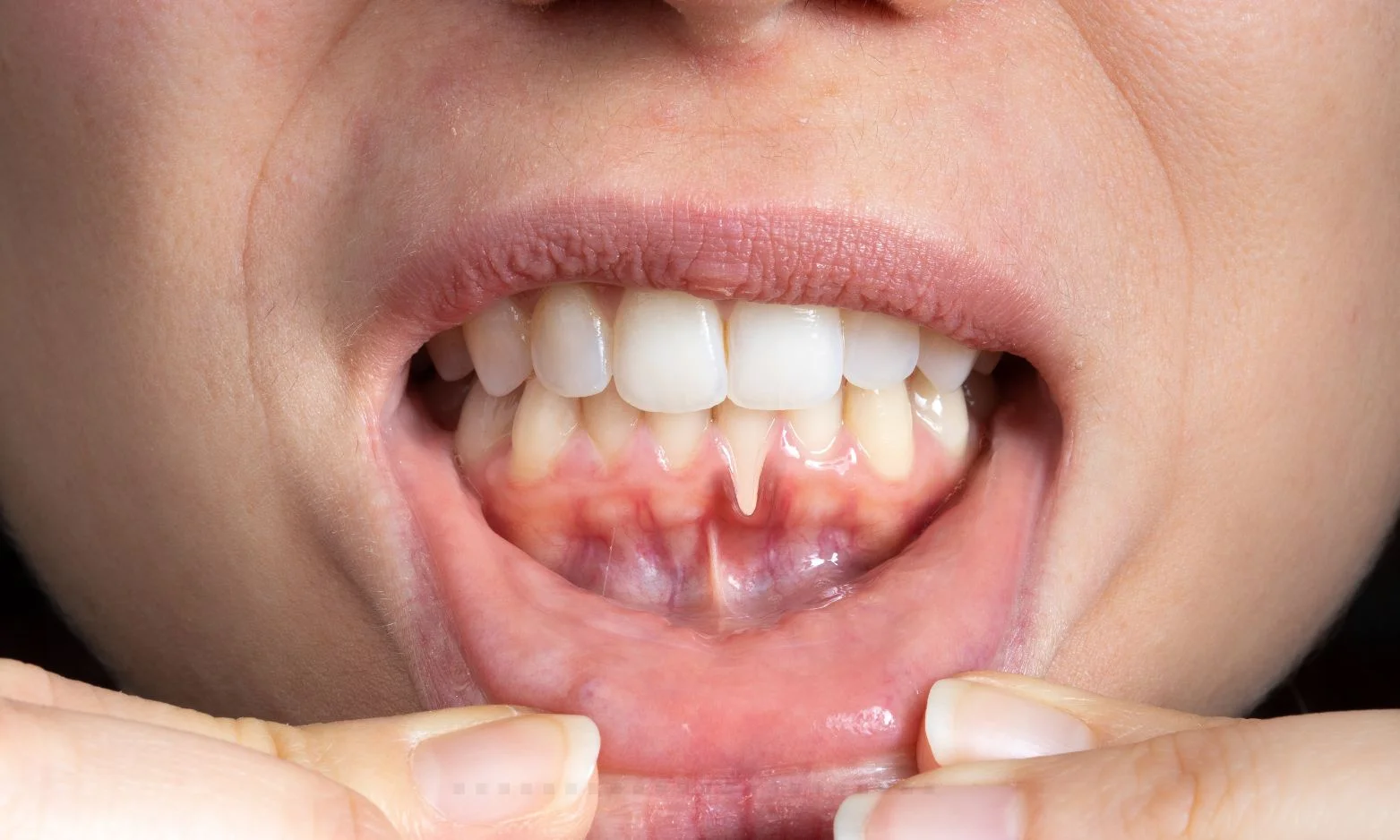
This blog covers the following aspects:
This blog tells you how gum recession slowly occurs over time from habits you have, such as brushing too hard, developing plaque, and grinding (among other things) and how it can happen without pain for several years.
It also emphasizes the importance of early diagnosis, the role of proper oral hygiene and the treatment that a dentist can provide in preventing its progression.
Introduction
We do see a very common concern, in fact, at Contemporary Family Dentistry every week. A person sits in the chair, somewhat uncertain, and remarks, “My teeth seem longer than they used to be” or “my gums feel different when I brush.” Most people don’t immediately make the link to seriousness for those little changes. Typically believe it is just getting older or perhaps possibly brushing too vigorously for a couple of days.
This is typically when we begin talking about the causes and how to prevent gum recession.
Gum recession is not a sudden occurrence. It builds slowly. It is not something that you wake up one morning and realize that you have it. Instead, it infiltrates you undetected, in the form of daily routines you do without giving them much thought. Which makes it difficult. People adapt to the changes, and they don’t know that something is amiss.
We say to patients one thing at the beginning. It’s not a coincidence that your gums move down. Over time, there is always something that pushes them there.
What gum recession actually feels like in real life
Most people expect gum problems to hurt. That is why they miss the early signs.
But gum recession usually starts in a quiet way. You might notice a little sensitivity when you drink something cold. Or maybe flossing starts to feel slightly uncomfortable in one area. Sometimes you see a small gap near the gum line and think it is nothing.
Then one day, you look closely in the mirror and realize a tooth looks longer than the others.
That is usually when concern kicks in.
We often explain it like this to patients. Your gums act like a protective blanket around your teeth. When that blanket slowly pulls back, the tooth underneath starts reacting more to everything around it. Cold drinks feel colder. Hot drinks feel sharper. Even brushing feels a bit different.
Why gum health changes so quietly
One of the biggest reasons people struggle with What Causes Gum Recession and How to Stop It is because the early stages do not feel dramatic.
You do not get a loud warning. There is no sudden pain that forces you to stop everything and fix it immediately. Instead, it develops through small daily patterns.
Here are some common themes that we observe repeatedly in our clinic.
Some people brush too hard, thinking that the harder they brush, the cleaner their teeth will be. Others do not floss for extended periods of time and only clean the surfaces that they see. Some react to stress by grinding their teeth and not even realizing it. Others just have thin, or sensitive gums, due to their genes.
These things are not inherently dangerous. However, over time, the sum of these adds up.
The American Dental Association says that over the years, the key to maintaining gum health is gentle brushing with good technique. Most people are taken aback when they learn that the harder the brushing, the higher the risk of problems with the gums.
The everyday habits that quietly push gums back
Let us talk honestly about what we see most often.
Brushing too aggressively
This is definitely one of the habits we correct number one in the clinic.
“Make sure I am cleaning properly,” is a comment that people frequently make; that means they push harder on the toothbrush. A logical thing to do, but gums do not like pressure. They prefer being handled in a consistent and gentle manner.
If a person brushes excessively daily, the gum line begins to recede gradually. It’s not a fast process so it remains undetectable to people until it becomes visible.
Generally, soft brushes and a gentle circular brushing are recommended. No fancy movements, only gentle and controlled movements.
Cleveland Clinic also notes that excessive brushing practices can also cause gum irritation and long-term recession.
Letting plaque sit too long
Another common pattern is inconsistency.
Some people brush well in the morning but rush at night. Others skip flossing for days or weeks. The problem is not always lack of effort. It is usually lack of consistency.
When plaque stays on the teeth too long, it hardens and irritates the gums. Over time, that irritation turns into inflammation, and inflamed gums start to pull away from the teeth.
It is a slow process, so people do not connect the dots right away.
The Centers for Disease Control and Prevention explains that plaque buildup plays a major role in gum disease progression, which is closely linked to recession.
Stress and clenching without realizing it
This one surprises a lot of patients.
Many people clench their teeth while working, driving, or even sleeping. They do not notice it until they start feeling jaw tension or morning headaches.
That constant pressure does not just affect teeth. It also puts stress on the gums and supporting structures. Over time, that pressure can contribute to gum movement and recession.
We often suggest a night guard in cases where clenching becomes frequent. It does not fix stress, but it protects the mouth from the damage that stress creates.
The early signs people usually ignore
If there is one thing we wish more people noticed early, it is this stage.
Gum recession always gives small signals first. The problem is that these signals feel too minor to worry about.
People often ignore:
- A little sensitivity in one tooth
- Slight bleeding during brushing
- Gums that look uneven in a small area
- A tooth that suddenly feels “different”
None of these feel urgent on their own. But together, they tell a story.
We always remind patients that gums do not change overnight. So if something feels different, even slightly, it deserves attention.
Why early action matters more than people think
Patients tend to have a lot of questions regarding what causes gum recession and how to stop it, and they typically have a lot of complications when it comes to the treatment.
However, the best outcomes always occur when they are aware early.
When there’s a lot of gum tissue recession, gum tissue doesn’t always regenerate on its own. At that point, the approach is more about preventing additional damage than repairing everything.
That is why, we put so much focus on early care at Contemporary Family Dentistry. Knowledge is the power to control the outcome and the sooner you know what is happening, the sooner you can control it.
Little changes in behavior could add up to a lot if identified early.
A simple way to think about it
We usually explain gum health in a very simple way.
Think of your gums like the foundation around a house. You do not notice the foundation every day, but it supports everything above it. If small cracks start forming in that foundation, the structure above it slowly becomes less stable.
Your gums work the same way. When they stay healthy, everything feels normal. When they start changing, the effects show up slowly in different parts of your mouth.
That is why understanding What Causes Gum Recession and How to Stop It is not just about dentistry. It is about long term stability for your entire smile.
How we actually help patients stop gum recession in real life
When someone comes to Contemporary Family Dentistry after noticing gum changes, they usually expect something complicated or intimidating. In reality, most cases start with very simple adjustments. We do not jump straight into advanced treatments unless we truly need them. We first look at daily habits, oral hygiene patterns, and lifestyle factors because those usually drive the problem in the first place.
When we talk about What Causes Gum Recession and How to Stop It, the “stop it” part often matters more than anything else. Once you stop the ongoing damage, the gums get a chance to stabilize.
Let us walk through what actually works.
Step 1: Fix the brushing habit before anything else
This is always our starting point.
We often ask patients to show us how they brush. Not because we are judging, but because most people never learned the correct technique in the first place.
A lot of people move the brush back and forth quickly with a lot of pressure. It feels effective, but it slowly irritates the gum line.
We guide patients toward something much simpler. A soft brush, light pressure, and slow circular movements. That alone can change how the gums respond within weeks.
The American Dental Association consistently highlights gentle brushing as one of the most important habits for long term gum protection. We see that play out in real life every day in our clinic.
Step 2: Get serious about cleaning between teeth
This is where many people struggle a bit.
Flossing is not as satisfying as brushing and is often neglected. However, gum recession typically begins between teeth, where brushing is not able to get to effectively.
Plaque that doesn’t get expelled from these spaces makes gums inflamed. That inflammation over time lifts the gum tissue away.
What we say to patients is generally something simple. While brushing cleans the front of your home, flossing cleans the back! You need both.
According to Cleveland Clinic, gum disease formation is largely due to plaque buildup between teeth, and this is directly related to gum recession.
Step 3: Professional cleaning is more effective than you realize.
While good brushing and flossing will help reduce plaque, over time it can turn into a hard substance called tartar. When it is set, it will not come off a person’s home routine.
This is what professional cleaning is for.
Dental instruments are used to clean accumulation where patients can’t clean at home. Gums are lighter and less irritated after cleaning. Most people experience decreased sensation in a short time.
Regular cleanings also help us to be able to see change in time when we are monitoring What Causes Gum Recession and How to Stop It.
Step 4: Wear a protection device if you clench or grind your teeth.
Many patients don’t know that they grind their teeth until we tell them.
It is almost always apparent by the flattened edges of the teeth, jaw pain or morning headaches.
Teeth grind throughout the day, constantly putting stress on the teeth and surrounding gum structures. This pressure doesn’t go away at night. It accumulates slowly over time, and can be a gradual factor that causes gum movement.
For these types of conditions, a custom night guard is often recommended. It resembles a cushion between teeth and eases impact damage.
But it’s not sensational; it is very supportive of the mouth.
Step 5: Make alterations to your food consumption that are more than expected.
Far too little attention is paid to diet in gum health discussions.
No, not strict rules or complicated plans, we’re simply referring to basic guidelines. We’re talking about little daily decisions.
Vitamin C, calcium and antioxidants are essential for healthy gums. Fresh fruits, vegetables, dairy and water are all good for the mouth’s environment.
The Harvard T.H. Chan School of Public Health describes the connection between nutrition and tissue repair and immune response – both of which are important for gum health.
It’s a cliché, but we remind our patients that the body needs good fuel for optimal healing of the gums.
Step 6: Smoking makes everything worse, even with hygiene taking place.
This is one of the most candid one on one conversations, we have with our patients.
Smoking decreases gum healing and can lead to gum recession even if you brush correctly. It impacts circulation, this way gums don’t receive oxygen and nutrients.
Most people see a significant improvement in their gums’ health when they stop or cut back on smoking. The change isn’t happening immediately, but eventually makes itself known.
Tobacco is well known by the CDC Tobacco Program to contribute to gum disease, and that is what we observe in our practice.
Step 7: Watch your stress levels more closely than you think
Stress shows up in the mouth more than most people realize.
Clenching, grinding, and jaw tension often come from stress. You may not even notice it during the day, but your mouth feels it.
When we talk about What Causes Gum Recession and How to Stop It, stress does not appear on most people’s list. But clinically, it plays a real role in how often we see grinding related gum issues.
Simple awareness helps. Once patients recognize the habit, they can start reducing it with small changes like relaxation techniques or night guards when needed.
When gum recession needs professional treatment
Not every case can be managed with home care alone.
When gum tissue has already pulled back significantly, we look at treatment options that focus on protection and repair.
Some common approaches include:
Deep cleaning treatment
We clean below the gum line to remove bacteria and reduce inflammation. This helps stabilize the condition and prevents further progression.
Gum grafting
In more advanced cases, we may restore gum coverage using grafting techniques. This helps protect exposed roots and improves comfort.
Bonding or protective coverage
Sometimes we use protective materials to cover sensitive root areas and reduce discomfort.
We always personalize the treatment based on how far the recession has progressed and what caused it in the first place.
What long term prevention really looks like
If we had to simplify prevention, we would say it comes down to consistency, not perfection.
You do not need a complicated routine. You need a steady one.
Here is what actually works in the long run:
- Brush gently twice a day
- Floss once daily without skipping
- Visit your dentist regularly
- Avoid tobacco products
- Protect your teeth if you grind
- Eat a balanced, nutrient rich diet
These habits may look simple, but they build strong long term protection for your gums.
Final thoughts from our clinic
When patients first ask us What Causes Gum Recession and How to Stop It, they usually expect a long list of complicated answers. But the truth feels more practical than that.
Gum recession usually grows from small habits repeated over time. It does not come from one big mistake. It comes from everyday patterns that slowly affect gum health.
The positive side is this. Small corrections also create real improvement.
At Contemporary Family Dentistry, we see patients turn things around all the time just by adjusting how they brush, improving consistency, and coming in for regular care. Nothing extreme. Just steady attention.
Your gums respond to how you treat them every single day. When you treat them gently and consistently, they stay strong for years.
If you notice early signs or just want to be safe, getting a checkup is always a smart move. It gives you clarity and peace of mind before things progress further.
FAQs
1. Can gum recession stop on its own?
No, it does not stop without changes in habits or professional care. You need to address the cause to prevent it from getting worse.
2. Is gum recession reversible?
Gums do not naturally grow back, but treatment can stop further recession and improve appearance in many cases.
3. What is the fastest way to stop gum recession?
The fastest way is to fix brushing habits, improve daily cleaning, and get a professional dental evaluation.
4. Does gum recession always need surgery?
No, most early cases do not need surgery. Many cases improve with non surgical care and lifestyle changes.
5. When should I worry about gum recession?
You should pay attention when you notice sensitivity, visible tooth roots, or changes in gum height. Early action always helps more.


